{{ variable.name }}
Quantity:

Product Description
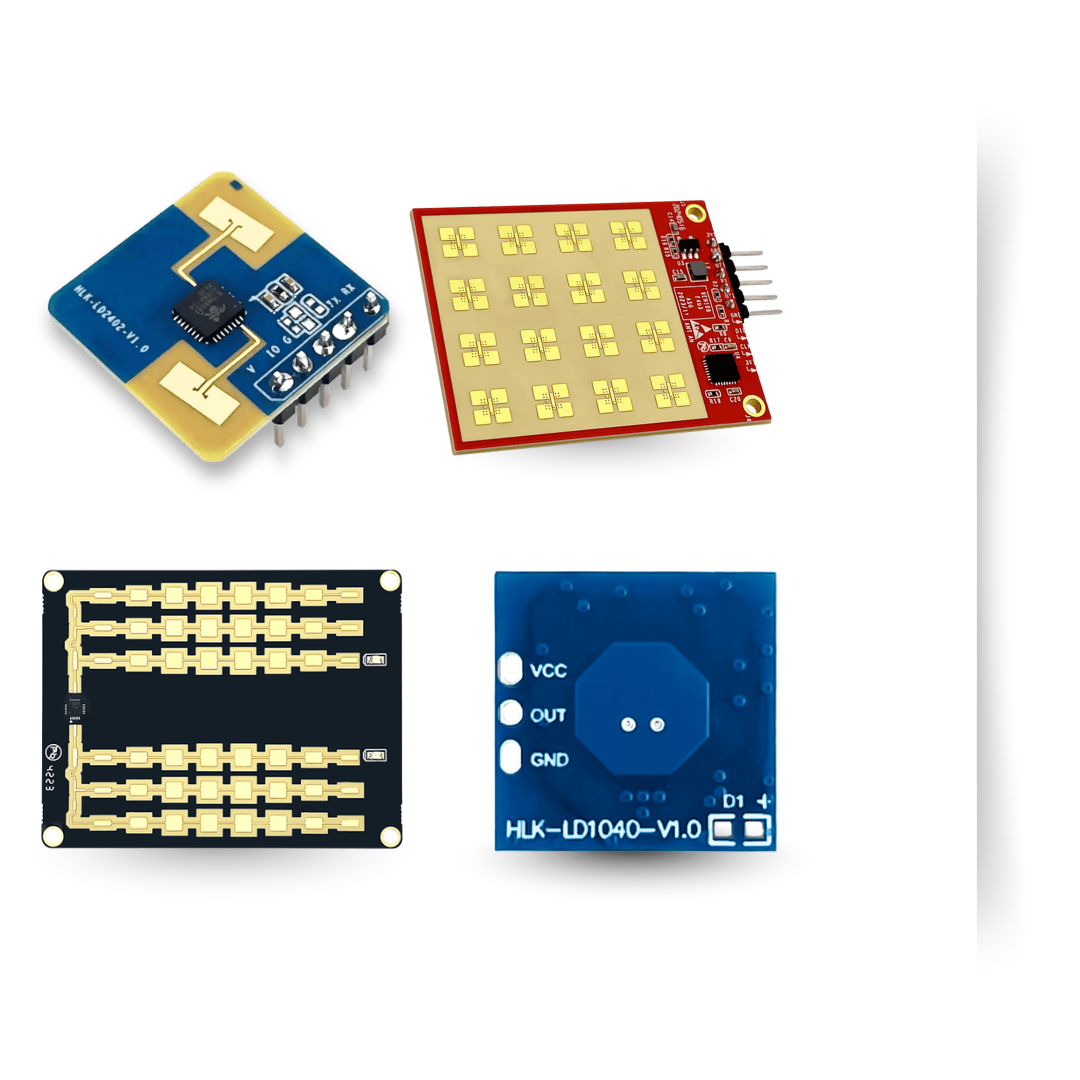
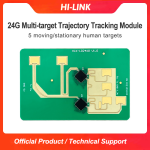
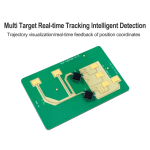
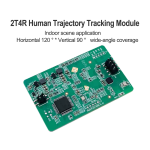
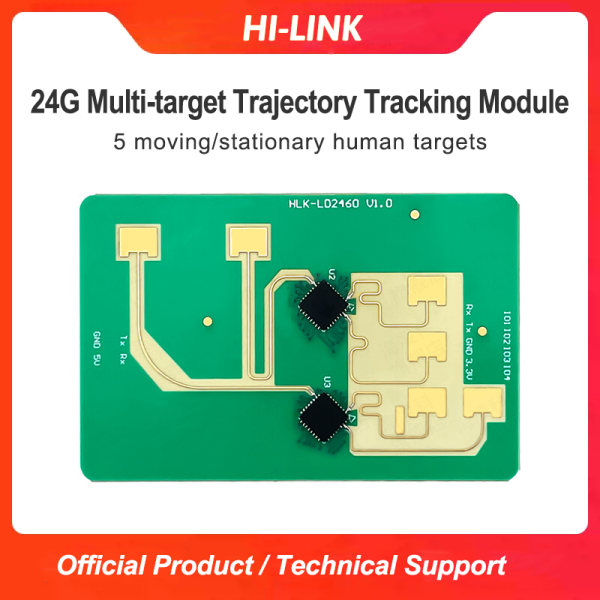
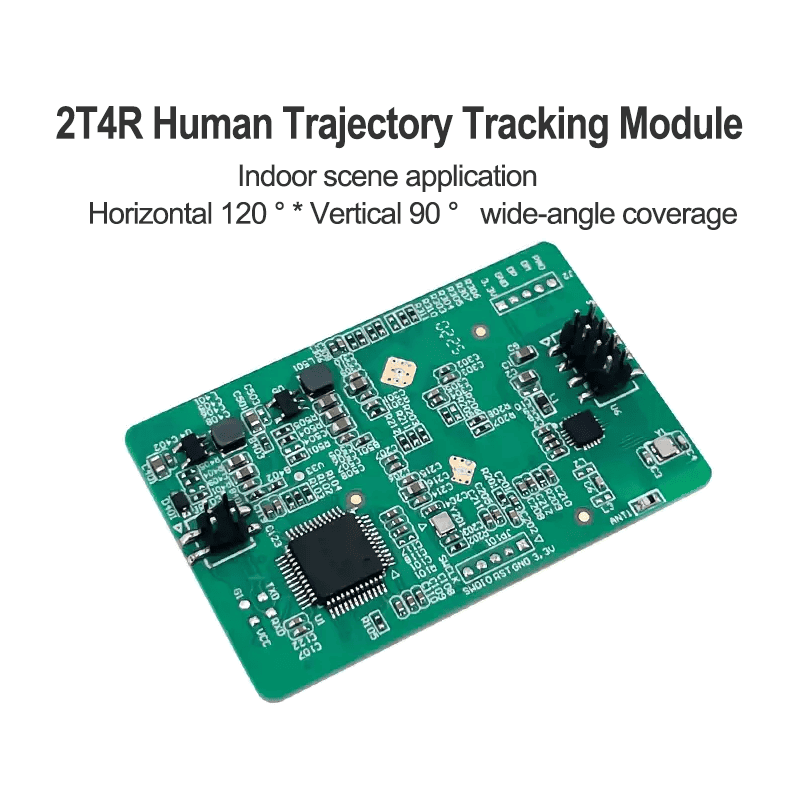
HLK-LD2460 is a 24GHz millimeter wave radar product for human perception, with distance angle test function. It consists of 1-transmitter and 2-receiver millimeter wave radar chips, high-performance microstrip antenna, high-performance MCU, high-performance Bluetooth SOC and peripheral auxiliary circuits. It uses FMCW waveform to accurately identify 3-5 human targets and estimate the location of the targets. This product can be used in scenes such as home, office, hotel, etc. to achieve accurate sensing of multiple moving, micro-moving or stationary human bodies.
Product parameters
(1) Detection angle and distance
| No. | Project |
Function description |
Index |
| 1 |
Number of people detected |
Number of people can be detected with the module |
If a person is sitting or standing in the radar field of view, at least 3 people can be detected; if a person is moving, up to 5 people can be detected |
| 2 |
Detection distance
|
The detection distance and conditions of the module in the bare board state |
1 Dynamic human body: within ±50°, distance ≥6m; ±50°~±60°, distance ≥5.5m 2 Static human body: within ±50°, distance ≥5m; ±50°~±60°, distance ≥4.5m
|
| 3 |
Distance resolution |
The minimum distance distinguished by this module |
0.75m |
| 4 |
Distance accuracy |
The absolute error of the module in distance |
≤0.3m |
| 5 |
Horizontal detection angle |
The maximum horizontal angle that the module can detect |
120° |
| 6 |
Vertical detection angle |
The maximum vertical angle that the module can detect |
90° |
| 7 |
Angular resolution |
The minimum angle distinguished by this module |
40° |
| 8 |
Angle accuracy |
The module's absolute angle error |
≤5° |
| 9 |
OTA function |
Online upgrade function |
Support |
| 10 |
Motion trigger time |
Refers to the detection time when a person is exercising |
0.5s |
| 11 | existence perception time | Refers to the detection time when a person is stationary | ≤30s |
(2) Electric performance
| No. | Project | Index |
| 1 |
Working frequency band |
24GHz-24.25GHz |
| 2 |
Working bandwidth |
250Mhz |
| 3 |
EIRP |
13dBm |
| 4 | Modulation method | FMCW (Frequency Modulated Continuous Wave) |
| 5 | Working voltage | 5V |
| 6 | Working Current | ≤250mA |
| 7 | Working temperature | -40℃~85℃ |
| 8 | Storage temperature | -40℃~85℃ |
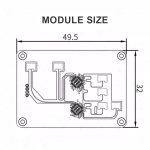
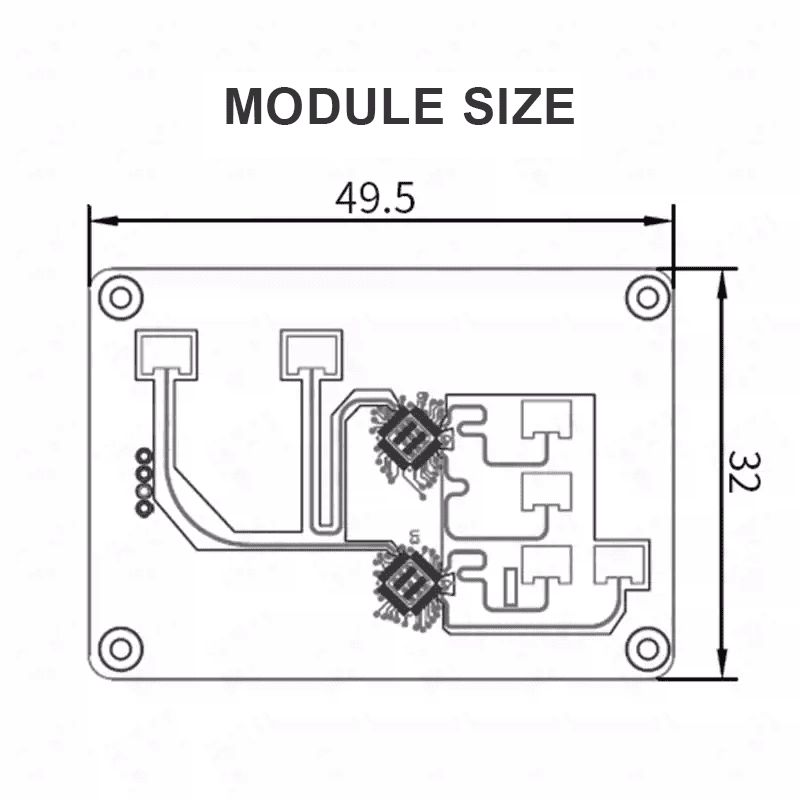
Module size and pin description


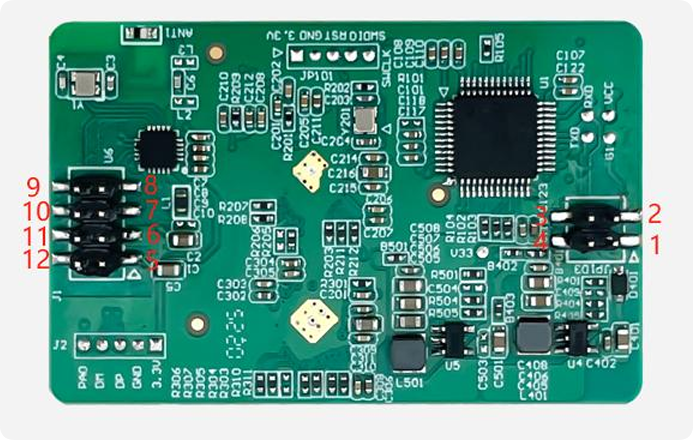
Module pin definition
| Pin No. | Name | IO type | Function | Illustration |
| 1 | 5V | PWR | Power input | DC5V |
| 2 | GND | GND | GND | GND |
| 3 | Tx1 | O | UART1 output | - |
| 4 | Rx1 | I | UART1 input | - |
| 5 | VDD33 | PWR | Power input | 3.3V/NC, not connected when not debugging |
| 6 | GND | GND | GND | GND |
| 7 | Tx2 | O | UART2 output | Radar data reporting and command response |
| 8 | Rx2 | I | UART2 input | Command receiving |
| 9 | IO1 | I/O | GPIO1/Reserved | - |
| 10 | IO2 | I/O | GPIO2/Reserved | - |
| 11 | IO3 | I/O | GPIO3/Reserved | - |
| 12 | IO4 | I/O | GPIO4/Reserved | - |
Table 1 Definition of radar pin
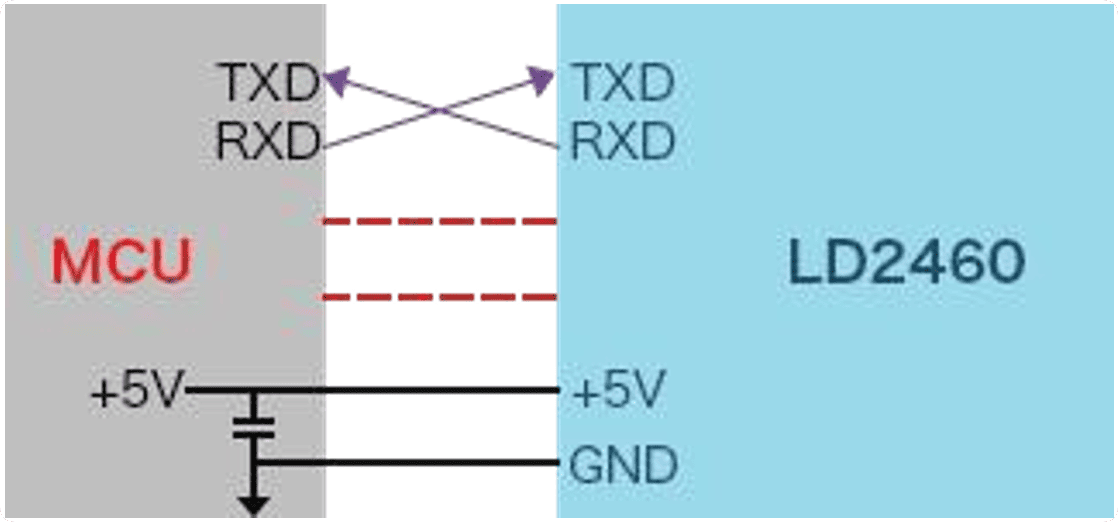
Warmly note: In order to receive serial port data normally, the serial port needs to share the same ground with the module.
Using connection figure

Figure 4 Schematic diagram of radar module and peripheral connection